Journal
On Building with the Ground
Three houses, in three countries, built in part from the ground they stand on.
Fieldwork · June 2026
Most building materials are travellers. Brick is fired a county away from where it is laid. Steel is rolled in one country and bolted in another. The glass that makes a house bright has usually crossed a sea to get there. A house built this way can stand anywhere, which is its convenience and its quiet loss. For our first houses we wanted the opposite. We wanted walls that could only stand where they stand, because they are made, in part, of the ground they stand on.
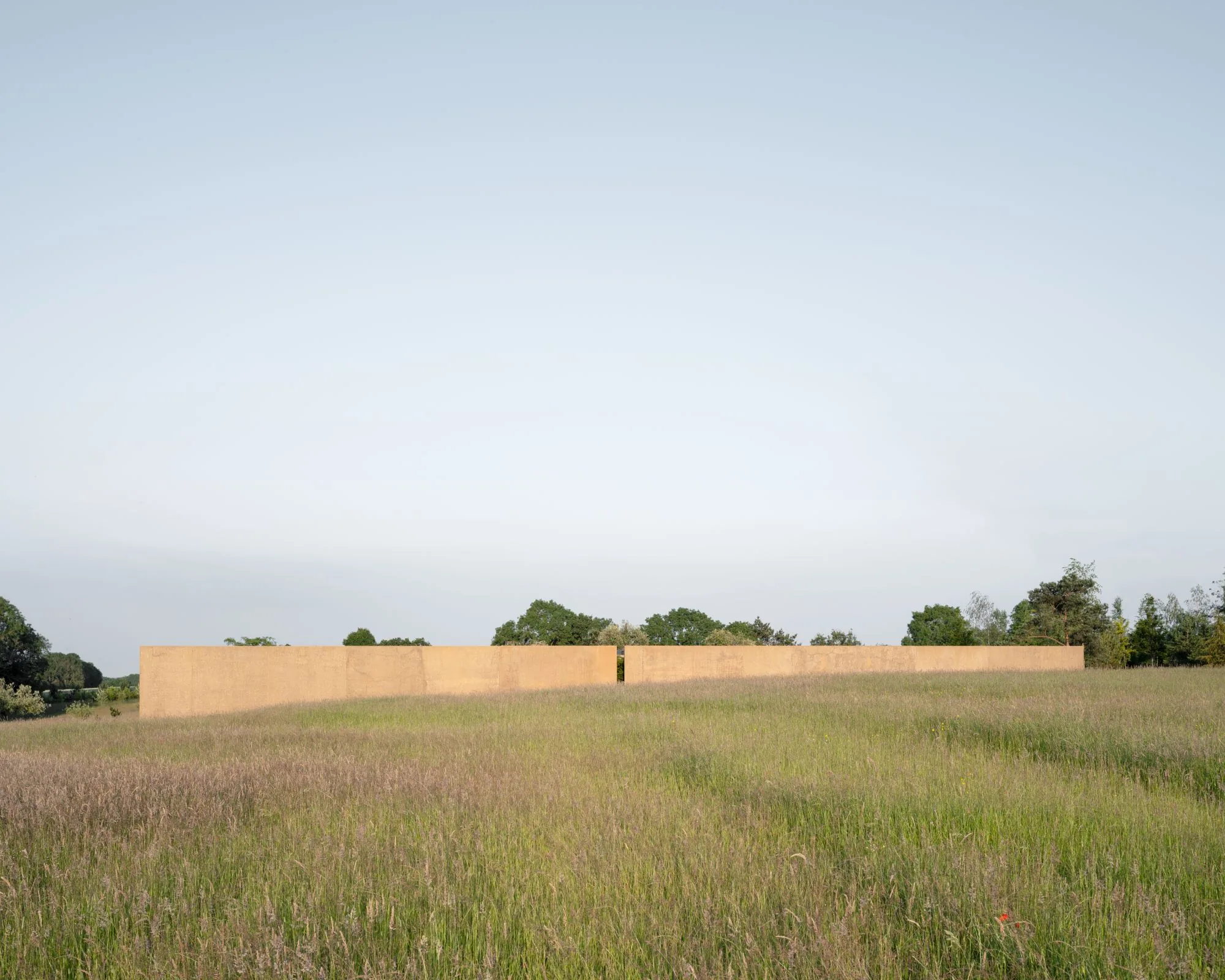
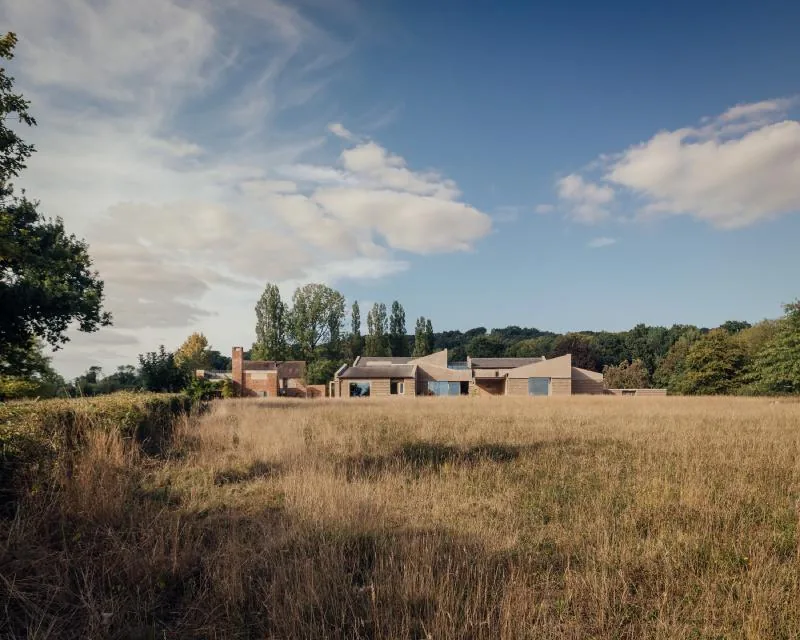
The ground is the first material a practice meets and the last one it usually trusts. We came to it slowly. On a hill above an Oxfordshire valley, the earth cut from the field in summer was rammed back into walls the following winter. Eight tonnes of it, laid up a hand's breadth at a time, each day's work left as a faint seam in the morning shadow. We had been told that rammed earth cools the room it encloses. What we learned, tamping it, was that it cools the maker first. The hands go cold against the damp face long before the room is a room at all.
Since then we have built into three grounds that share almost nothing. The Oxfordshire clay is heavy and slow. The Wiltshire chalk runs pale and dry through the aggregate. The Arizona desert gives up an earth the colour of a struck match, and a light that has to be shaded rather than gathered. Each wall is a different weight, a different colour, a different temperature under the wrist. And yet each does the same thing. It gives the house the colour of its own field, so that from the lane the building reads less as an object set down than as a piece of the ground stood up.
This is not our invention. It is the oldest way to build, and most of the world built like it until brick and steel made distance cheap. Kenneth Frampton gave the impulse a name, a regionalism that resists the placeless, but the houses that taught us were never theorised. A chalk-cob barn. A stone long-house. A wall of pressed desert earth keeping a room cool while the day burns outside. We are only paying attention to what the ground has always offered to anyone willing to dig it.
What the ground asks in return is patience, and a willingness to let the building age. A rammed wall is not finished when the formwork is struck. It goes on settling, drinking the weather and giving it back, for years. At the Oxfordshire house the south face has weathered to the colour of cold tea, while the north face, shaded by a stair from eleven until four, has stayed the colour of sand. One wall, two climates, written by nothing but the path of the sun. We did not design that. We admitted it.
A house made of its ground carries a claim that no cladding can fake. It does not say that the family is wealthy, though it may be. It says that the family is here, and means to stay. The heaviest, most local thing we know how to make, a wall of the field itself, turns out to produce the lightest and most universal feeling a house can give, which is the feeling of belonging to a place.
We have three of these walls now, in three countries, holding up three roofs. We have not added to any of them. On a still evening you can put a hand flat against one and feel the day leaving it, warm at the top where the last sun reached, cool at the foot where the ground begins, and understand, without being told, exactly where you are standing.